

NZ High Court declines judicial review of Tesla fast-charging case
The court said judicial review was the wrong route to reargue a Disputes Tribunal loss over two repaired write-offs, ordering NZ$26,827 costs.

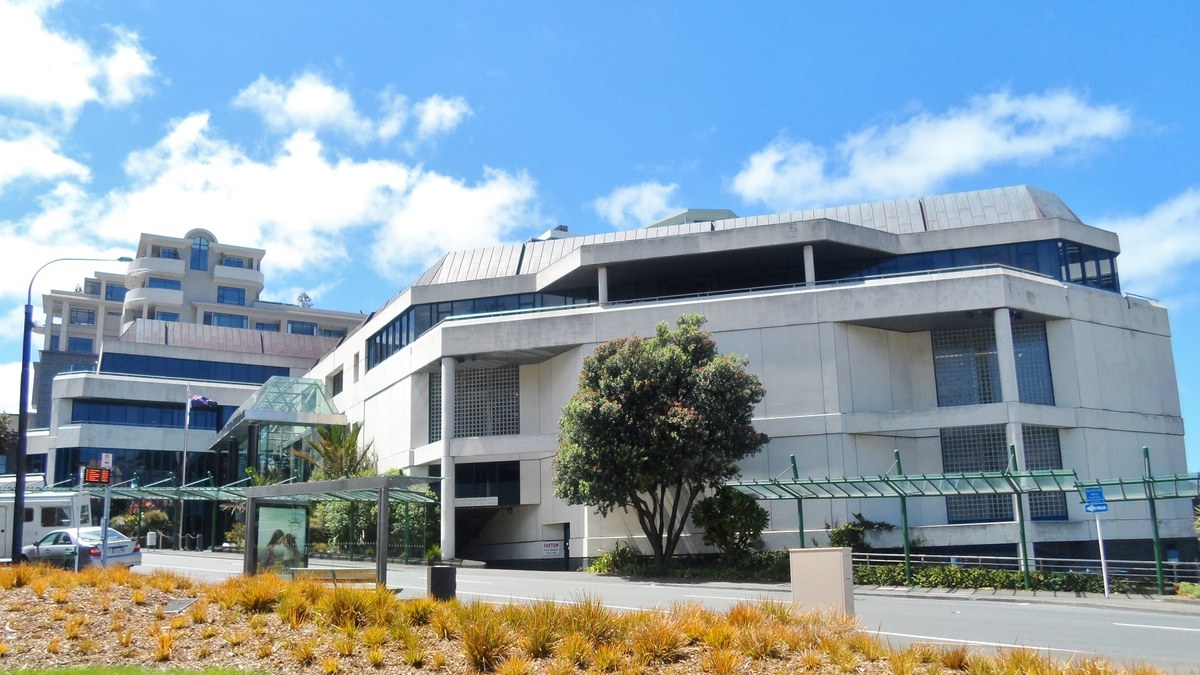 Pear285 / Wikimedia
Key points
- New Zealand's High Court dismissed the owner's judicial review, so the Disputes Tribunal's win for Tesla stands.
- Tesla's policy says fast charging is disabled on cars it treats as unsupported, including third-party fast chargers.
- Tesla quoted NZ$1,624.43 a car for inspection, restoring fast charging only if satisfied it was safe.
New Zealand's High Court has dismissed a bid for judicial review by the owner of two repaired Tesla Model 3s whose fast charging Tesla switched off remotely. That leaves a Disputes Tribunal win for Tesla in place.
The court did not decide the dispute afresh. It held that judicial review was the wrong way to reargue the tribunal's decision.
What happened to the cars
The owner bought both cars from Turners Cars between August and September 2024. Both had been written off by their former owners' insurers and deregistered, then sold in "damaged vehicle" auctions.
He had them repaired. Both passed a mandatory inspection and were registered again. He is an electrical engineer and is confident the damage was confined to the bodywork, not the high voltage batteries.
How Tesla switched it off
Tesla had been monitoring the register kept by NZ Transport Agency Waka Kotahi. When the register listed the cars as structurally damaged, Tesla classed each one an "unsupported vehicle" and sent an over-the-air software update disabling DC fast charging.
Tesla justified the switch-off by the rare risk of a catastrophic fire from damaged high voltage batteries. The updates took effect once the owner used the cars through his Tesla app. He can charge them only from a regular power point, which can take days.
What the tribunal decided
The owner argued in the Disputes Tribunal, which settles claims up to NZ$60,000, that Tesla breached the Fair Trading Act. He also relied on the Consumer Guarantees Act. Both Acts are explained on the government's Consumer Protection site.
On 22 September 2025 the tribunal dismissed the claim, finding Tesla's policy not misleading, deceptive or unconscionable. A knowing buyer of a car listed as damaged can reasonably be taken to accept the risk it "may have a loss of functionality", the referee said.
On 12 November 2025 it refused a rehearing. Because the owner had bought the cars from another company, not Tesla, the Consumer Guarantees Act had "little if any applicability" to his claim.
Why the court would not step in
The Courts of New Zealand say judicial review checks whether a decision was lawful. The only appeal from the tribunal is to the District Court, and then only for an unfairly run hearing. The owner did not appeal, saying he could not show unfairness.
Justice Boldt found all ten grounds challenged the merits, which judicial review cannot reopen. By law the tribunal decides on "the substantial merits and justice of the case", not strict legal rights. The owner must pay Tesla NZ$26,827 in costs plus NZ$257.40 disbursements.
What the judge said about Tesla
In an aside, Justice Boldt said Tesla's policy makes "a clear exception for damaged and deregistered vehicles". He was not persuaded the referee had erred, or that the cars stopped being of "acceptable quality" after the updates.
Tesla's power over a sold car
Tesla's lawyer accepted it needs legal authority to change someone else's car. A car belongs to its owner, subject only to "a clear legal basis". The judge called Tesla's power over sold cars "remarkable", to be "exercised only in the most tightly constrained circumstances".
Both sides agreed the owner had to accept Tesla's terms to log in to the app, though no evidence was given on that point. The court did not decide whether those terms gave Tesla that entitlement.
What Tesla's policy says
Tesla's New Zealand policy page says "Fast charging is disabled" on unsupported cars, including Tesla Supercharging and third-party fast chargers. Warranties and extended service agreements "are permanently void", though recalls are still fixed if the car is safe to repair. Tesla's Australian page is identical.
Before you buy a repaired write-off Tesla
- Expect Tesla to find out. It uses sources including government agencies, insurers and "vehicle auction sites", and in this case acted within days of a register listing.
- Assume no fast charging, including other networks, until a Tesla inspection finds the car safe.
- Budget for an inspection at your expense. Tesla quoted NZ$1,624.43 a car here, and would restore fast charging only if satisfied it was safe.
- Don't treat a clean history as proof. Tesla says cars with clean titles "may still be classified as unsupported".
- Price in a void warranty. The app still works and unrestricted parts can still be bought.
Rod Bland is the publisher and editor of Volts & Bots. He lives in Sydney and drives a Model Y L bought in Australia in 2026, with HW4 and FSD (Supervised). More about Rod Bland.