

EV tax bill introduced: what it means for a Tesla on a novated lease
Leases committed before April 2027 keep the exemption under the bill, and EVs up to A$75,000 leased before April 2029 pay no FBT.

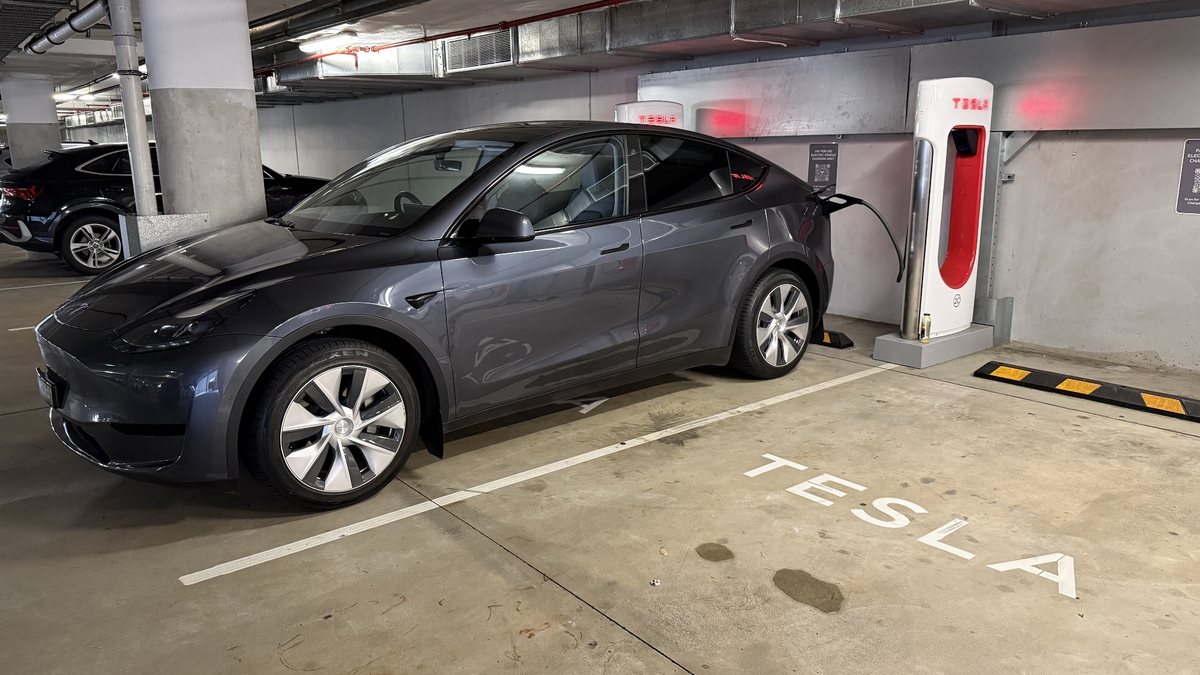 Leesieoh / Wikimedia
Key points
- Introduced on 27 Oct 2026, the bill is not yet law.
- Cars at A$75,000 or less committed to from 1 April 2027 to 31 March 2029 pay no FBT.
- Dearer cars under the luxury car tax limit, and new deals from April 2029, get 25 per cent off.
A bill introduced on 27 Oct 2026 would end the fringe benefits tax (FBT) exemption for electric cars, Teslas included, on novated leases committed to from 1 April 2027.
In its place is a discount, and cars at A$75,000 or less leased before April 2029 would still pay nothing.
What the bill changes
Today an electric car is exempt from FBT if luxury car tax was never payable on it, says the Australian Taxation Office (ATO). Schedule 5 of the Tax Reform No. 4 Bill repeals that exemption.
FBT on a car is normally worked out from 20 per cent of its base value a year. Base value is the cost including GST, dealer delivery and accessories, but not registration or stamp duty. For a battery electric car, the bill cuts that rate:
- Base value A$75,000 or less: 100 per cent off, so no FBT.
- Base value above A$75,000: 25 per cent off, so 20 per cent becomes 15 per cent.
- Over the luxury car tax limit for fuel-efficient cars: no discount.
The A$75,000 is fixed in the bill, but the upper cap moves every financial year with the luxury car tax limit. The government's explanatory memorandum, on the Parliament of Australia site, uses A$91,661 for 2026–27.
The full discount has an end date. From 1 April 2029 the 100 per cent option goes, leaving 25 per cent off for new leases. A car at A$75,000 or less committed to before then keeps the full discount until the commitment ends.
The date you commit decides
Leases committed to before 1 April 2027 keep today's exemption until the commitment ends. A commitment is made once the deal is agreed and can't be backed out of, the explanatory memorandum says.
So changing the deal later can cost you. Each of these counts as a new commitment and moves the car onto the new rules:
- refinancing
- changing the lease term or the residual value
- fitting accessories that raise the payments
- changing employer, even within the same group
Swapping to a new lease early just to keep the exemption may be caught by the general anti-avoidance rules.
One change from Treasury's exposure draft helps: the Minister can protect the old treatment, until 1 April 2032, where a commitment ends for reasons outside the employee's control.
What the discount is worth
On an A$80,000 car, our estimate puts the discount at A$3,910.77 a year in FBT. It assumes private use all year and no employee contribution.
It uses the ATO's FBT rates, listed only for FBT years to 31 March 2027: 47 per cent, after a gross-up of 2.0802 where the employer claims GST credits.
- Base value A$80,000 at the standard 20 per cent: A$16,000 x 2.0802 x 0.47 = A$15,643.10.
- A Tesla at that value, at 15 per cent: A$12,000 x 2.0802 x 0.47 = A$11,732.33, or A$3,910.77 less.
- Base value A$70,000, committed to between 1 April 2027 and 31 March 2029: nil.
- The same A$70,000 car committed to from 1 April 2029: A$10,500 x 2.0802 x 0.47 = A$10,265.79.
The car still counts in the employee's reportable fringe benefits at the full 20 per cent. At the ATO's 1.8868 gross-up, the A$80,000 car shows A$16,000 x 1.8868 = A$30,188.80.
Not law yet
The bill needs both houses to pass it and Royal Assent. If that comes after 1 April 2027, the changes still apply to benefits provided from that date.
It may not last, either. The Coalition would scrap the Electric Car Discount if it wins the next election, Shadow Attorney-General Michaelia Cash said on 28 October, The Driven reported.
Rod Bland is the publisher and editor of Volts & Bots. He lives in Sydney and drives a Model Y L bought in Australia in 2026, with HW4 and FSD (Supervised). More about Rod Bland.