

2027 vs 2026 Tesla Model Y L: what changed
Drive and CarExpert report the 2027 car does 0-100 km/h in 4.5 seconds, down from 5.0, and the VIN's 10th character shows its year.

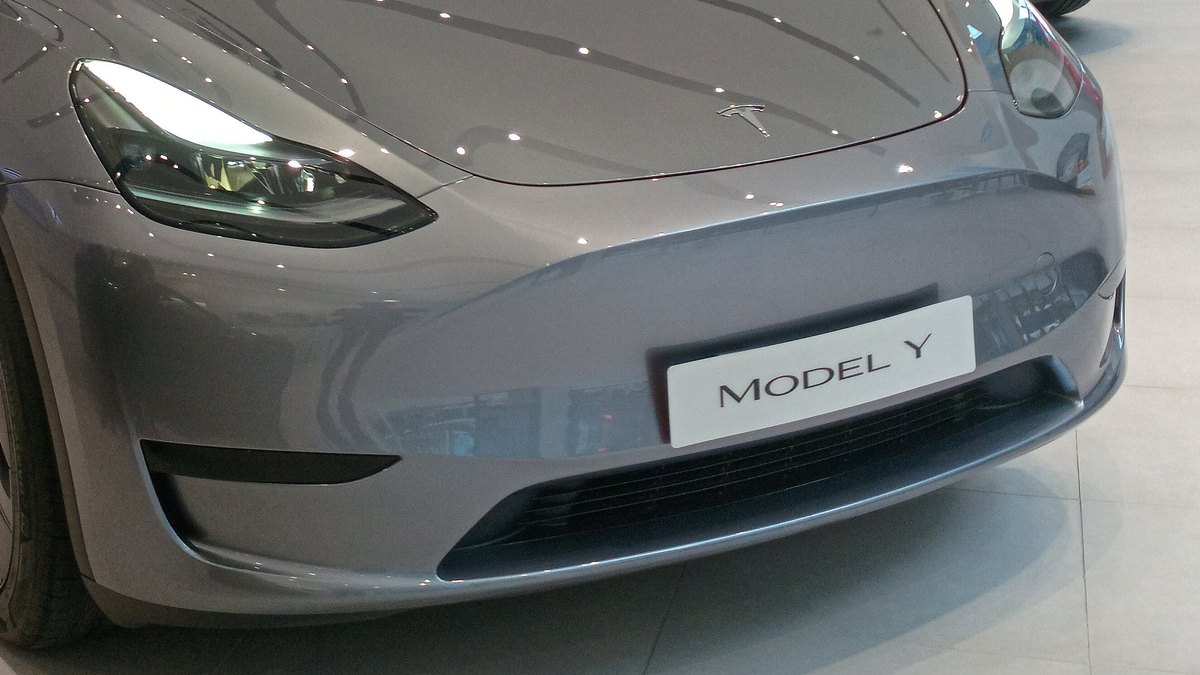 Ethan Llamas / Wikimedia
The 2027 Model Y L reaches 100 km/h in 4.5 seconds, half a second quicker than the 2026 car, CarExpert and Drive reported when orders opened on 1 October. The VIN (vehicle identification number), not your order date, shows which model year you have.
Times and price
The Model Y Premium Long Range gained the same half-second, going from 4.8 to 4.3 seconds.
Tesla's Australian Model Y page listed the L at A$74,900 in November 2026, and the New Zealand page at NZ$83,900. Drive reported the A$74,900 is before on-road costs.
For that you get Dual Motor all-wheel drive, 681 km on the WLTP lab range test and a 201 km/h top speed.
Apart from a cut on the Performance, CarExpert reported no price change for the other 2027 Model Y trims.
Powershare on the 2026 car
Drive describes Powershare as vehicle-to-load, sold with an adapter, which CarExpert put at A$145. CarExpert reported it on the 2026 model year Model Y and the 2027 Model 3.
Reading the year in the VIN
Your VIN shows in your Tesla account next to the estimated delivery, according to the delivery page. Until Tesla plans your delivery, the space for it on the Australian order agreement stays blank.
When it arrives, count along to the 10th character. T means a 2026 model year and V means 2027, says NHTSA, the US road safety regulator. A VIN has 17 characters and skips the letters I, O and Q.
The model year is the one the manufacturer assigns. If the 7th character is a letter, the year in position 10 falls between 2010 and 2039.
One catch: a stand-in VIN from the Department of Infrastructure also uses T for 2026 and V for 2027, but puts the year in the 4th character.
Rod Bland is the publisher and editor of Volts & Bots. He lives in Sydney and drives a Model Y L bought in Australia in 2026, with HW4 and FSD (Supervised). More about Rod Bland.