
NSW committee says the EV road-user charge would likely be struck down
The committee still recommends starting the charge, with amendments, and points to a 2023 High Court case on Victoria's charge.

 sv1ambo / Wikimedia
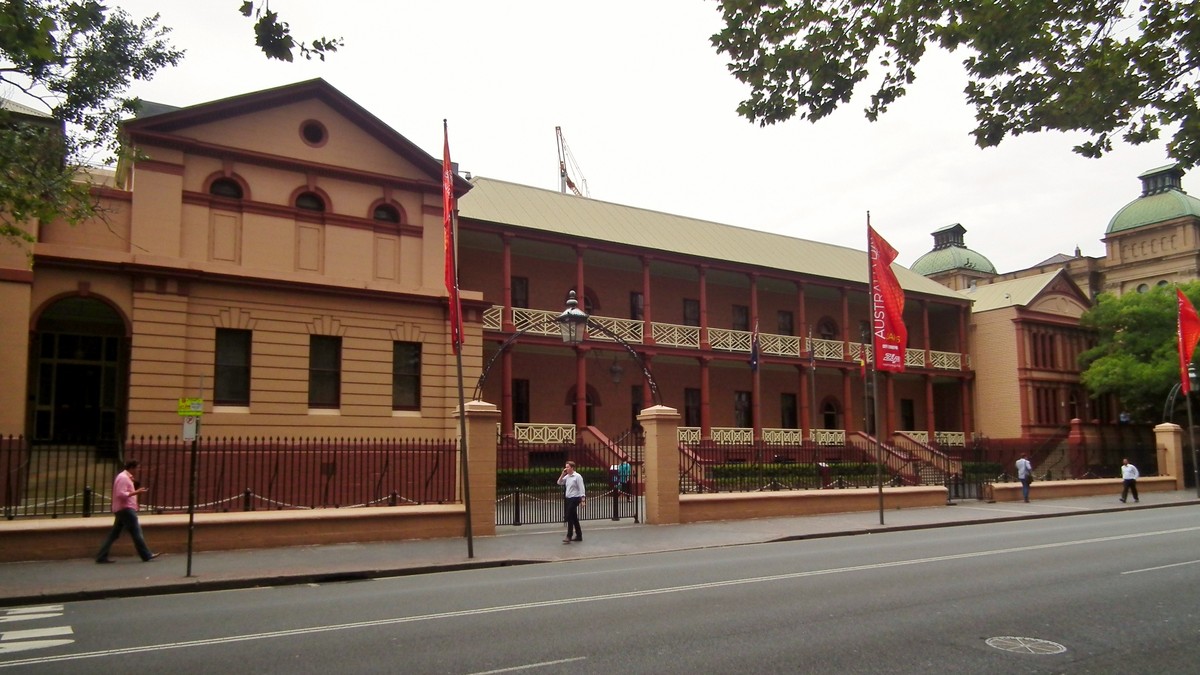
The NSW Legislative Council's Public Accountability and Works Committee says the state's electric vehicle road user charge "would likely be struck down" if challenged. Its Report 9, published on 30 Sep 2026, still recommends the government go ahead with it, with amendments.
The legal finding and the recommendation
Finding 3 (page 48) reads:
That, given the High Court decision in Vanderstock v The State of Victoria (2023) and the strong parallels with the New South Wales road user charge as it is currently legislated, the New South Wales road user charge would likely meet with a similar legal challenge on Constitutional grounds and, on the balance of probabilities, would likely be struck down.
The NSW Government's road user charge page says the government "is working to assess the potential implications of the decision for NSW's electric vehicle road user charge".
Recommendation 10 (page 50) points the other way:
That, absent a national road user charging framework and regime, the NSW Government proceed to implement the electric vehicle road user charge established by the Electric Vehicles (Revenue Arrangements) Act 2021 subject to the amendments outlined in Recommendations 1 to 8 above.
Those amendments include Recommendation 6, which would reframe the charge as "a licence fee or fee for service, rather than a tax or excise".
Finding 2, which calls the 2021 Act "most likely unconstitutional", was moved by Mark Latham, an independent, and passed 4 to 3. He also lodged a dissenting statement against the report.
When it would start
The government's page says the charge starts on 1 July 2027 or when EVs reach 30 per cent of new vehicle sales, if sooner. The report says that is when the Minister is reasonably satisfied sales will reach 30 per cent (paragraph 1.34).
The 2026–27 rate is 3.095 cents a kilometre for a battery or hydrogen fuel cell EV, and 2.476 cents (80 per cent) for a plug-in hybrid. Rates are indexed to the consumer price index each financial year.
Questions the report leaves open
The report says "there are still many unanswered questions" about how a charge would work (paragraph 2.153). Evidence was "limited" on whether the government is developing the regulations, "despite forecast revenue of $440 million featuring in the latest State Budget over the forward estimates period".
Tesla's submission
Tesla's Submission 25, on the NSW Legislative Council site, says a charge should apply to all vehicles "regardless of their powertrain", because a charge on EVs alone is "structurally unfair". Existing fees and taxes mean EVs "are already contributing their fair share".
What happens next
Based on the 30 September tabling date, the government response would be due on 30 December 2026. The committee noted this falls in the Christmas closedown, so the government will be asked to respond by 11 January 2027. NSW Parliament lists no response yet.
The inquiry heard evidence that industry preparations to challenge the Act are under way (paragraph 2.149).
Rod Bland is the publisher and editor of Volts & Bots. He lives in Sydney and drives a Model Y L bought in Australia in 2026, with HW4 and FSD (Supervised). More about Rod Bland.