

NSW apartment owners get a right to install an EV charger, but not yet
Strata committees will not be able to unreasonably block a charger on your lot, but the rules start only once a start date is set.

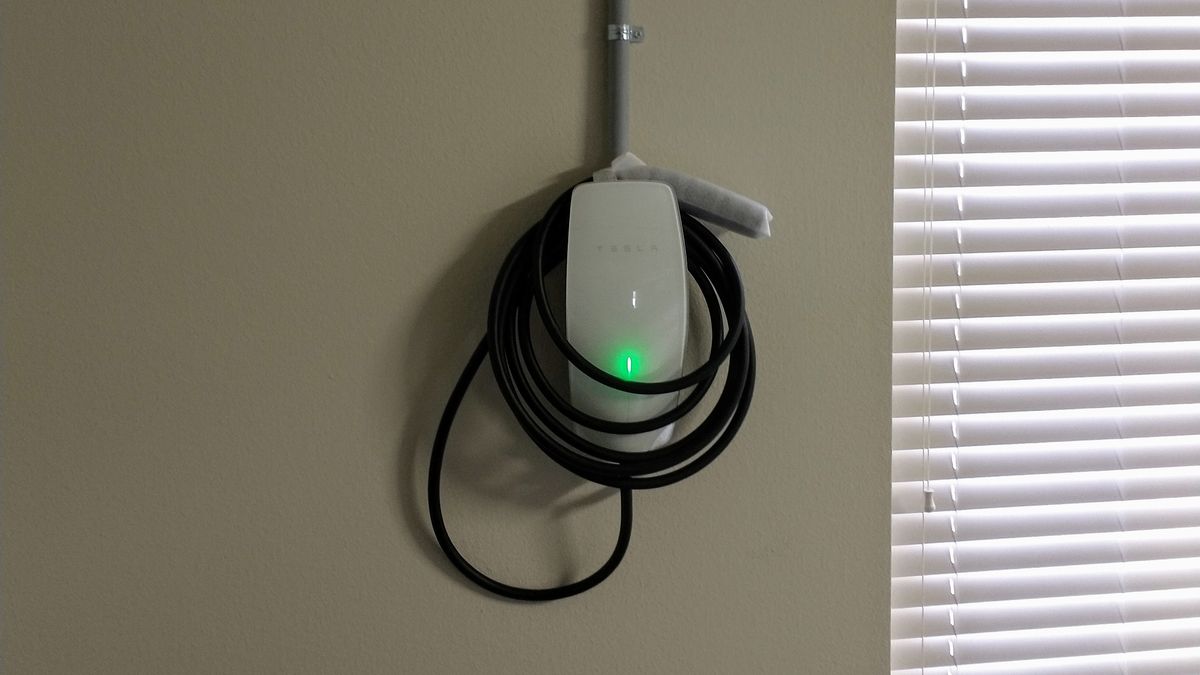 Whoisjohngalt / Wikimedia
Key points
- A strata committee must not unreasonably object to an owner installing an EV charger on their lot.
- Silence for 3 months after the owner's notice counts as no objection.
- The charging rules start on a date to be set by official notice, and no notice had appeared at publication.
If you own an apartment in NSW, a new law will stop your strata committee unreasonably blocking an EV charger on your lot, the part you own outright. The rules are not in force and have no start date yet.
Where the law is up to
The rules are in the Strata Schemes Legislation Amendment (Miscellaneous) Act 2026. The NSW legislation website's bill page shows it passed both houses of Parliament on 15 Oct 2026. It was signed into law on 23 Oct 2026 as Act No 46 of 2026.
It adds two new sections, numbered 132D and 132E, to the Strata Schemes Management Act 2015, the main law on how strata buildings are run.
Signed into law, not yet in force
Section 2 of the Act switches on a listed group of changes straight away. Everything else, including the charging rules, starts "on a day or days to be appointed by proclamation". That means a start date will be set later by official notice.
The NSW legislation notifications, where those notices appear, list the Act only as signed into law. They showed no start-date notice for it at publication. The current Strata Schemes Management Act does not yet contain the new charging section.
The rules that apply today
Until the new rules start, section 108 of the Strata Schemes Management Act still applies. Under it, an owner can change common property only after the owners corporation approves the work by special resolution.
Common property is the shared parts of the building that no single owner holds. The owners corporation is all the owners acting together, usually through the strata committee. A special resolution is a formal owners' vote that needs broad support rather than a bare majority.
How you will ask
Once the new rules start, you send the strata committee an installation notice. You can install a charger on your lot after you receive a written "no objection" notice back.
The installation notice is a written description of your plan, plus any documents the regulations require. Regulations are the detailed rules the government writes under the Act.
The right applies even when the work also involves changing common property. For this work, the usual approval steps for changes to common property, cosmetic work and minor renovations (sections 108 to 110) do not apply.
Before approving green upgrades, which the law calls sustainability infrastructure, an owners corporation must normally weigh up a set list of matters. The Act says that list does not apply to a charger installed under these rules.
The committee has 3 months to reply
The committee's duties are all in section 132D:
- It must reply with either a no-objection notice or a written objection that explains its reasons.
- It has 3 months from receiving your notice, or longer if the regulations set a longer period.
- If it does not reply in time, it is treated as having given a no-objection notice.
- It must not object unreasonably.
- A by-law, one of the building's own rules, has no effect to the extent it would unreasonably ban a charger on an owner's lot.
The regulations can spell out what counts as a reasonable or unreasonable objection, or by-law ban.
If the committee says no
You can apply to the Tribunal, which the Strata Schemes Management Act defines as the Civil and Administrative Tribunal. If the Tribunal is satisfied the objection was unreasonable, it can order the committee to issue a no-objection notice.
Who pays, including for the power
Unless the regulations say otherwise, you pay to install the charger.
You must also repay the owners corporation for the reasonable costs of maintaining and running it. The same goes for fixing any damage it causes to common property, and for anything else the regulations list.
The Act does not mention electricity. The closest it comes is the reasonable costs of "operating" the charger. It sets no fees or prices.
What it means for a Tesla owner
The regulations will also decide which chargers count. The Act covers an EV charging station "of a kind prescribed by the regulations", meaning only the types those rules list. It also allows different paperwork for different kinds.
So whether a Tesla Wall Connector on your lot qualifies, and what documents it needs, depends on regulations not yet published. You can only send a complete installation notice once the start date is set and those regulations are out.
Rod Bland is the publisher and editor of Volts & Bots. He lives in Sydney and drives a Model Y L bought in Australia in 2026, with HW4 and FSD (Supervised). More about Rod Bland.